
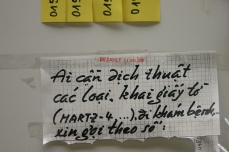
 In just under four months of – ideally – daily practice, I’ve mastered some 300 Vietnamese words.
Or have I? When I see them on my flashcards, there’s a fair chance that I recognise them and can tell what they mean. But if you were to show me words that I haven’t studied, likely as not I would believe I recognised and understood many of those also. The trouble with Vietnamese is that so many of its words look so damn similar. The letter a alone has 18 varieties, counting all the possible single and double diacritics. But my European eyes will focus on the a as such and my European brain will remember only the bare and unadorned a. I have to force them to pay heed to the scribbles above it – and sometimes even below it, as in ạ, ặ and ậ. Continue reading
 It’s impossible to find a language in which the world can communicate across linguistic borders. For the time being, we make do with English, but that was a bad solution even before the two major Anglophone countries contracted Mad Voter Disease. The language gives a 6% minority of the world population an edge that leaves most of the other 94% impotent and frustrated.
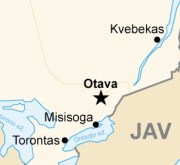 In chapter 32 of Lingo, I describe – and poke fun at – the way Latvians and Lithuanians write foreign names. Basically, they spell every name as phonetically as possible and then tag on a case ending for good measure. The first US president is known as Džordžas Vašingtonas in Lithuanian, Džordžs Vašingtons in Latvian; the capital and state named after him are written as Vašingtonas in Lithuanian, Vašingtona in Latvian. In Lingo, I trace the history of this habit, once widespread across Europe, in a very general sort of way. But at the time, I had no specific information as to why the Lithuanians and Latvians have maintained it, whereas most other language communities using the Latin script dropped it long ago.
 I love
  A father recently sought my advice about the linguistic education of his two young children. Among the many friendly and interesting emails I get from readers of Lingo, this one really stood out, because his was a question I’d never given much thought to before. Our brief correspondence is reproduced below, anonymised, very lightly edited and, of course, with the father’s permission.
 The scribbles on the right are not just doodles, a badly drawn rough sea or an attempt by a 5-year-old to emulate grown-ups’ fascinating handwriting. A real adult has written a real word here: minimum.
 Traduttore traditore, usually translated as ‘the translator is a betrayer’, is probably the only Italian expression in my active vocabulary. And other than dictionaries and suchlike, Umberto Eco’s La ricerca della lingua perfetta must be the only Italian book on my shelves. So there is something peculiarly congruous about my discovering, earlier today, a disconcerting translation error in that book.
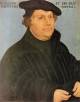 On page 98 and 99 of the English-language edition, In Search Of the Perfect Language, I came across a passage claiming that for the German reformer Martin Luther, ‘German was the language closest to God.’ Statements of that sort can easily be found about Hebrew, Arabic, Tamil, Korean and some other languages, possibly including German. Yet flowing from Luther’s quill, it somehow seemed out of character.
  Plurals and singulars are not hewn in stone. Plurals, especially those of foreign extraction, are regularly mistaken for singulars, and – sometimes – vice versa.
 Gaston Dorren, language writer