

 Traduttore traditore, usually translated as ‘the translator is a betrayer’, is probably the only Italian expression in my active vocabulary. And other than dictionaries and suchlike, Umberto Eco’s La ricerca della lingua perfetta must be the only Italian book on my shelves. So there is something peculiarly congruous about my discovering, earlier today, a disconcerting translation error in that book.
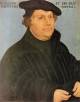 On page 98 and 99 of the English-language edition, In Search Of the Perfect Language, I came across a passage claiming that for the German reformer Martin Luther, ‘German was the language closest to God.’ Statements of that sort can easily be found about Hebrew, Arabic, Tamil, Korean and some other languages, possibly including German. Yet flowing from Luther’s quill, it somehow seemed out of character. Continue reading
 Plurals and singulars are not hewn in stone. Plurals, especially those of foreign extraction, are regularly mistaken for singulars, and – sometimes – vice versa.
 Earlier this year, I was interviewed in the comfort of my home by Patrick Cox (see photo), a British-American radio journalist who specialises in language. I’d enjoyed dozens of his World in Words shows as podcasts, partly because they are so interesting, partly because I like Patrick’s friendly and intelligent style and his pleasant voice (and trust me, I’m not saying this about all interviewers). World in Words is probably the language podcast that I like best, with
  In classical antiquity, Europe’s major written languages were Latin and Greek. Why is it that the former is long extinct, while the latter is still spoken?
 In the past few weeks, I’ve been on a couple of radio shows, and even on regional TV. I enjoy doing this: it produces a pleasant state of sharpened mental alertness, I am asked questions that I’m capable of answering and it stimulates book sales, which helps me make a living.
 Under the headline ‘
 Gaston Dorren, language writer