The Small Dictator

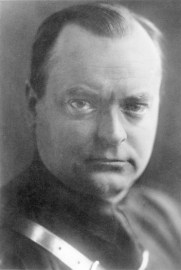
Hollands Nationalsozialistenführer Nussert 309-36It had to happen sometime, and it’s happened now: a journalist has told the world they don’t like Lingo all that much. Ever since the publication of the book, just over a year ago, I’ve been spoiled with good reviews, in Britain, the US and elsewhere. Some have been generously appreciative, others nothing short of jubilant. I felt almost embarrassed at times: surely the book wasn’t as good as all that? But I was greatly pleased too, if only because good reviews help me survive on Lingo while I’m working at my new book. And that’s without mentioning the psychological gratification of strangers saying friendly things about the fruit of my linguistic obsession. Continue reading

Etymologising through my hat?

shapkaBusiness deals that seem too good to be true usually are, and the same is true for etymologies.

This morning, I came across the Turkish word şapka, pronounced /shapka/, for ‘hat’. It reminded me of the French word chapeau, and I thought the -ka ending sounded just like a Russian suffix, as in babushka (grandmother) and balalaika (literally ‘babbler’). Continue reading

Open-air dictionary

The tiny Swiss village of Vnà got an entry in my app Language lover’s guide to Europe after its inhabitants – all 70 of them – turned the place into an open-air dictionary of the local Romansh language. They simply stuck signs to their houses with single Romansh words and their translations into German, Italian, French and English. A friend of mine who is there right now just sent me a couple of pictures. Here they are.

2015-10-29 14.58.50
Continue reading

The first scribbler of Western Europe

Throw your mind back to the very first time you tried your little hand at writing. With the unfamiliar pen between your fingers and your tongue between your lips, you gave of your best, but unless you were a calligraphic child prodigy, the result was, well, nothing to write home about. It looked shaky and straggly and, in a word, messy. Yet it didn’t stop your parents from being touched by your scribbles.

Call me weird, but that’s how I too felt earlier this week when I visited the Epigraphic Museum in Rome’s Baths of Diocletian. As its name and location suggest, it focuses on inscriptions from Antiquity, predominantly in Latin. Many of them look vaguely familiar: for the last five centuries or so, inscriptions in European and New World monuments have tended to emulate the Classical example. If you wonder what I’m talking about, open a new document in Word, choose the Times New Roman typeface and write a line in capitals. Continue reading

Thir house teen

ParkvallHere’s something I would have added to chapter 35 of Lingo if only I had known it at the time. According to Swedish linguist Mikael Parkvall, several Celtic languages have discontinous numerals. The example he mentions is from Irish: while the word for 13 is trí déag, ‘13 houses’ is trí theach déag, with the word for ‘house’ in the middle. ‘Thir house teen’ would be a clumsy rendering in English. These Celtic complications are not entirely unique, Parkvall adds: several African and indigenous American languages display similar phenomena. If you like this sort of thing, get your hands on a copy of his book Limits of language, as it’s full of nuggets like this. Continue reading

My (or rather Ann’s) time in Edinburgh

I’ve just returned from a five-day visit to the Edinburgh Book Festival. Worth a report, of course – except that in the meantime other things have piled up, all clamouring for my time. So I’m happy to find that Ann Morgan (of Reading the World fame and the nicest stage-mate I could have wished for) has managed to look back at the festival, including the several things that we attended together. Here then are her experiences, quite a few of which are similar to my own.

Ann Morgan's avatarA year of reading the world

2015-08-24_1440419319

I’ll admit it: I was nervous. Although my quest to read the world has taken me on many adventures and seen me speaking to a wide variety of audiences – from 20 Women’s Institute members in a school hall in Lee to 300 Procter & Gamble employees in Geneva – I had never faced a challenge quite like this. As I walked into the authors’ yurt, backstage at the Edinburgh International Book Festival, I couldn’t help being aware that I was here to take part in one of the most renowned literary events in the world.

Now, I’ve been in a yurt or two before (I once gave a talk in one in Canterbury), but I have never seen one to compare to this. Sprawling over an area about twice the size of my flat, it was made up of a series of conjoined octagons, which created pleasing little alcoves…

View original post 836 more words

Feline lingerie (2)

EtymologiconIn December, I wrote a post on the etymology of the word panties, tracing it back to a 3rd-century Greek saint, Pantaleon, whose name I translated as ‘all lion’. The tiniest of discoveries, of course, but a nice little piece of work all the same, or so I felt.

Imagine my chagrin when I recently discovered that Mark Forsyth had included this very connection between underwear and a Christian martyr in his book The Etymologicon. And to make things worse, I must have come across this factlet well before I wrote the blogpost, because I read the book a good while back. Amazingly, the link never even sounded familiar. This may be a case of entertainment-induced amnesia: Forsyth’s books (plural, since I also read his Elements of eloquence) tickle my brain in such a clever and amusing way that it switches to comedy mode and fails to memorise anything much. Continue reading

Edinburgh and Audible

Two pieces of exciting good news. Well, I’m excited.

EdbookfestThe one thing is that, at long last, I’m allowed to spread the word that I’ll be participating in the Edinburgh Book Festival. On Monday 24 August, at 2 pm, I’ll be interviewed abut Lingo in the Baillie Gifford Corner Theatre. I’ll share the honour with fellow author and journalist Ann Morgan, who wrote Reading the world. Later that day, I’ll participate in The Revolution Will be Tweeted, an event organised by Amnesty International, where four authors will be reading some work (not our own) around the use of social media in social activism. I’ll spend several days in Edinburgh, so I may be available for a chat about language over a cup or glass.

audibleSecond, there is a new edition of Lingo in the making, the fifth in all: an audio book! Audible have bought the rights. I happen to have an Audible subscription myself, so I know that they have lots of great and well produced stuff. I’m awfully pleased to see my Lingo mingle there with other books that I’ve enjoyed, by writers ranging from P.G. Wodehouse to Steven Pinker and from Jasper Fforde to Anton Chekhov.

Five reasons to vote (for me)

Goddess of victory

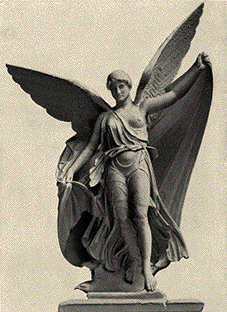
The goddess of gorgeous victory

My language blog has been included in this year’s Top 100 Language Professional blogs, which is the kick-off for the annual competition organised by the international multilingual language and translation portal bab.la and the Lexiophiles blog.

You see where I’m heading: I want to win, and therefore, I want your vote. If you’re willing to oblige, just click here and find me under the letter G of my first name, Gaston.

Vote the Top 100 Language Professional Blogs 2015 Continue reading

Retweets (2)

As I announced a couple of weeks ago, I will occasionally repost some of my tweets on this blog. So here’s the second batch.

24 March (see picture)
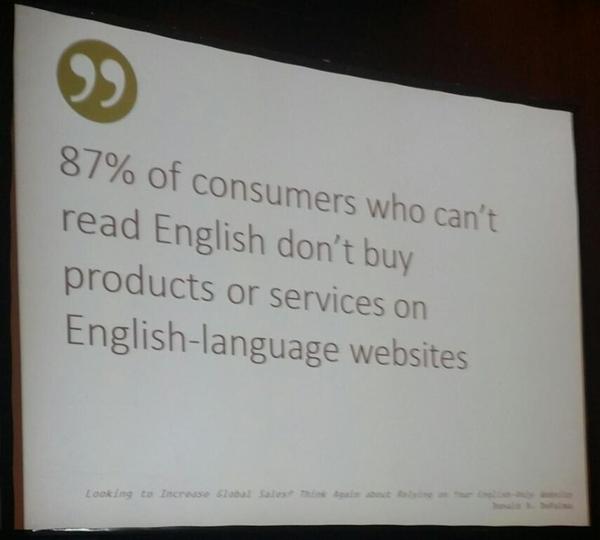
consumersRT @ciklopea: Some useful statistics from #galasevilla <– The other 13% love to send themselves a surprise package.
Okay, I retweeted @ciklopea’s message mostly because my own conclusion made me chuckle. But the more I think about it, the more sense my sceptical thought seems to make. I mean, who would buy a product or service on a website whose language they can’t understand? How would they even be sure what buttons to click and how to answer questions?

14 April
One of the advantages of learning the Arabic alphabet is that it makes Cyrillic and Greek look easy.
I mean it. I’ve been attempting to learn the Arabic script, and though I’m making headway, I find it surprisingly tough going. Partly, no doubt, this is just because it is extremely different from European scripts, and I knew only one character (alef) before I began. But I suspect the script has some inherently difficult features too, such as several shapes for the same character, small differences between different characters and small height compared to breadth, which makes it look snaky and somehow small. Also, the absence of short vowels in Arabic writing is frustrating, because even once you can read all there is to read, you don’t have access to the entire words.
I will try to learn the Korean alphabet later this year. My bet is that I will find that easier. If not, I’ll eat my words about Arabic. And let me add that I’m a big fan of Arabic calligraphy (much more so, frankly, than of Chinese calligraphy), so it’s not as if I dislike its looks.

28 March
How languages and dialects are being turned into commodities. Pity if you miss this amazing article: http://goo.gl/5z9FRq
Nothing to add. Read it!

26 March
Who changes language? Woman. http://goo.gl/2I5Smv
The wording of this tweet was an allusion to a famous rant from English literature. Who does this bad thing? Woman. Who does that bad thing? Woman. Who does the other bad thing and many more? Woman. Pity I can’t remember who wrote it. Probably Shakespeare, but unsteeped as I am in the English classics, I can’t remember. (Please, do let me know if you do.)
Anyway, the link leads to an Observer opinion article by the ever readworthy linguist John McWhorter, titled Women are far more innovative than men in this crucial part of life.

16 March
In Seoul, a Hangeul (Korean alphabet) Museum opened last October. I like this video review by Hyunwoo Sun: http://goo.gl/fRa3y8
I’ve no idea how many Koreans speak English, but the fact that Hyunwoo Sun does is great, because to me, it opens up a country that I know very little about.

14 March
Linguistic cheese map of Europe: http://goo.gl/uC7I4
What you can’t see here is that Southern Italy is cheese territory (well, cheso or something like that), not formaggio land.