Öh-oh…

loessWords crossing linguistic boundaries sometimes get mangled pretty badly. I’ve long known this, but I couldn’t help yelping ‘what?!’ the other day, when I heard a university lecturer, Craig Benjamin from Australia, pronounce as ‘lowess’ a word that in my book ought to sound more or less like ‘luss’.

Which is not to say that Benjamin was wrong.

The word under consideration was coined by a 19th-century German scientist, and it stands for a particular type of sediment deposited by wind. I would consider it an arcane geologic term, were it not for the fact that my Dutch home region of Limburg is covered in it. Its local name is Limburgian clay, but is is known to science as löss.

In German, two dots (diaeresis or umlaut) can always be replaced by an e after the character, so loess is a legitimate spelling for löss, with pronunciation unaffected. It was this ö-less variety that English adopted, back in 1833 – way before Motörhead and Häagen Dazs made dots look cool. And you guessed it: as soon as English incorporated loess, the original pronunciation took the back seat. It is now considered perfectly correct to say ‘lowess’, though ‘luss’ end even ‘less’ and (non-rhotic) ‘lurse’ are acceptable too.

Loess is common in China (see map), which was indeed the subject of Benjamin’s lecture. In Mandarin, the soil type is called huángtǔ (黃土), literally ‘yellow earth’. Perhaps English should have gone with that. When Chinese words get mangled, I don’t notice anyway.


Retweets (1)

Ouroboros-Abake

In the right-hand column of this blog, there appeared a tweet about this blogpost about previous tweets.

Twitter is the most ephemeral of media. You throw your deep thoughts, attempted jokes and mood updates at you followers. Chances are they never see them, and if they do, chances are they don’t pay much attention. Few messages elicit more than a handful of answers or retweets.
On the whole, this is fine. Twitter is chatter, not literature. However, some tweets deserve better, sometimes in their own right, but more often because they contain links to great stuff.
Therefore I intend occasionally, once every few weeks perhaps, to post some tweets here on the blog; mostly my own, but I may do some plagiarism as a side job. I’ll probably edit them a bit, for I can’t see why I should observe the 140-character limit here and retain the original typos and other infelicities.
So, here goes.  Continue reading

Surprise benefit

logoThe chapter in Lingo that deals with the Sami languages spoken in the northernmost part of Continental Europe is about their numerous words for snow. No hoax here: the fact has been confirmed by specialised linguists, one of whom I quote in the book.

Now you could be forgiven for thinking (especially by me, who thought the same) that this is the sort of factoid that will never be of any use except in Northern Europe or at a party of obsessive linguists. Imagine my surprise, then, to learn that Sami snow terminology is helping climate change science.

Read the full (750-word) story here.

Esperanto whispers (2)

In January, an Australian Esperantist, Jonathan Cooper, wrote me a thoughtful and interesting open letter, which he put up on his blog. Unfortunately, a technical problem prevented me from posting a reply there. Jonathan has now kindly added my text to his own post. Our discussion goes into some detail about how to design an easy-to-learn language, but if the Lingo chapter on Esperanto gripped you, you may find this back-and-forth worth your while.

One (1)

diceIt’s not just the loneliest number, it is also one hell of a numeral: one. Native speakers may disagree, of course – native speakers know everything about there they’re their English except how to spell it – but one holds many surprises for those who try to master the language later in life, such as myself.

What’s so hard about one, you wonder? All the different uses, that’s what, and all the different non-uses as well. Continue reading

Slip of the longue

A lion. 'Leo' in Latin, not 'deo'.

A lion. ‘Leo’ in Latin, not ‘deo’.

But for a silly mistake, I would have been a dinguist. You know, a dinguist – a specialist in dinguistics.

The mistake was not my own; it’s the old Romans what did it. And when I say old, I mean really old. Older even than Caesar, Cicero and Seneca, the authors who wrote the sort of Latin we are still somewhat familiar with – the classy, classical sort.

Before their Latin, there was Old Latin, and though it looked grammar-schoolish enough, it was different in many small ways. For instance, it had the word dingua for ‘tongue’ and ‘language’. Caesar, Cicero and Seneca would consider that old-fashioned; the Latin equivalent of Ye Olde Tea Shoppe. They would write lingua. And it’s in their footsteps that we follow every time we use the word linguistics. Continue reading

The language-eating giant and the 12 dwarfs

Britain is more multilingual than its image suggests, but at the same time too monolingual for its own good. What are its prospects?

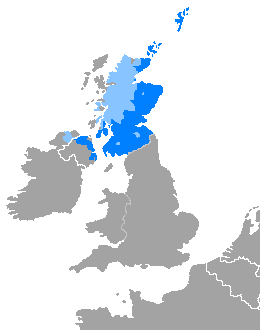
ScotsWhat would have happened to ‘the Scots leid’ if the Yes side had won the referendum? It has been officially recognised as a language separate from English since 2001, when Britain ratified the Charter for Minority and Regional Languages. But would Scottish independence have changed the character of Scots? Could the language have become less, well – English?

That’s not as far-fetched as it may seem. Norwegian and Danish were once considered a single language, but two fairly different standard languages emerged after Norway’s breakaway in 1814. Bosnians spoke Serbo-Croatian before independence (1992), but Serbian, Croatian or Bosnian nowadays. There’s little to distinguish the three of them yet, but check back in a century. Continue reading

Next!

Near the next door neighbours

The interestingly named Wells-next- the-Sea in Norfolk.

‘The end is nigh, the end is near, the end is bound to come next year.’ As doom and gloom goes, this prediction is not only charming – impeccable metre, simple but correct rhyme – but also linguistically interesting.

Its main attraction lies in the three words beginning with n: nigh, near and next. Say them out loud – does anything strike you? If not, let me help you by spelling them the Old English way: neah, near, niehsta. Rather like near, nearer, nearest, aren’t they? Or like high, higher, highest, for that matter. And that’s no coincidence, because they were indeed degrees of comparison, as grammarians call them: the positive neah meaning ‘near’, the comparative near meaning ‘nearer’ and the superlative niehsta meaning ‘nearest’. Continue reading

Feline lingerie

Winter_Lady_dressEtymology moves in a mysterious way, its wonders to perform. Who would think that the humble word panties has a proud, venerable origin?

No surprises in the first part of the journey back in time: panties is a diminutive of pants, itself a clipped form of pantaloons. Nowadays, this last word usually refers to trousers, but in the 17th and 18th centuries, it meant ‘tights’. English borrowed it from French (pantalon), which in turn had snatched it from Italian (pantalone). Continue reading