Unknown's avatar

About Gaston

taaljournalist / language writer boeken: Lingua, Babel en andere books: Lingo, Babel

The week as a rainbow

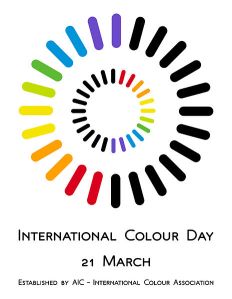
Int Colours Day bigWhat is it about days and colours that makes them such happy pairs? Journalists, marketers, idealists, they all love to give the days of the week a dab of paint: just google for Black Monday, Yellow Tuesday, Red Wednesday and Green or Purple Friday, and you’ll find all sorts of catastrophes, sales campaigns, football matches, environmental activism and gay solidarity.

Most of these are recent inventions, but others have long become household terms, in English or other languages. Here’s an incomplete list – feel free to add.

Blue Monday
Long before becoming a popular meme for a day in late January, claimed to be the gloomiest of the year, ‘blue Monday’ was already a well-known idiom in Dutch: blauwe maandag. Somebody who read philosophy ‘for a blue Monday’ studied it for a very short period and unsuccessfully. As for why a Monday and why blue, nobody is sure, though theories abound. Continue reading

False loans

Two weeks ago, the website Futility Closet reproduced a 1969 language puzzle that may be futile but certainly not uninteresting. It can only be solved if you know a thing or two about foreign languages. Personally, I managed to identify the languages 1, 3, and 5 correctly, while for 2, I was in doubt between two possibilities. I had no idea what number 4 might be (though of course, upon seeing the answer, it seemed obvious).

The puzzle inspired me to design one along the same lines myself. Continue reading

Languages worth a visit

spraknyttIn its most recent issue, the Norwegian magazine Språknytt (Language News) published a short column that I wrote for them. You can find the Norwegian version here (in Nynorsk, to be exact). Highly unfortunately and somewhat to my annoyance, any reference to the Language Lover’s Guide to Europe app was suppressed. Well, anyway – it’s a beautiful magazine with friendly editors, and the publication did generate a modest amount of interest from Scandinavia for my app and books. 

Since my Norwegian is not fit to print (I did study it for a while, but that was eight years ago and I never used it much), I wrote the article in English. I’ll reproduce it here. Any differences between this and the printed version are not my doing. Here goes:

I like history and I enjoy art. Honestly. But why do travel guide writers think that this is all tourists are interested in? No matter what guidebook you grab, all towns are described in terms of history and art (and, increasingly, shopping). But hey, people are more varied than that! Some of us love motorcycles, some geology. And some oddballs will make a detour to visit linguistic attractions. If only we knew where to find them. Continue reading

Etymixionary

2013-04-13 16.22.19

For young word lovers, incipient linguaphiles and budding language buffs, there’s no fun like Fictionary, also known as Dictionary Game. You know how it goes: one player chooses an unusual word and copies out its meaning, while the others devise fictitious, but plausible definitions. Players who guess the correct meaning are awarded one point, as are those whose definition is thought to be correct by another player.
Being a reader of this blog, you’re likely to be good at it; indeed, chances are that you’ve already found people hesitant to play with you, for fear of being crushed. You may even have joined a group of advanced players (or ‘afictionarians’), made up of middle-aged word lovers, entrenched linguaphiles and seasoned language buffs, whose spare time revolves around Fictionary (unlike their office hours, which they spend surreptitiously solving cryptic crosswords). Continue reading

The not so true Story of Spanish

SoSAs a reader, I love to get lost in a book, but it takes a good author’s confident guidance to make it happen. Jean-Benoît Nadeau and Julie Barlow, I’m sorry to say, have failed in this respect. More than to anything else, The Story of Spanish appeals to a side of me that I rather dislike: the red-pen-wielding schoolteacher.

Chapter 1 starts out beautifully: ‘Three millennia ago, when Rome was still a swamp and Athens was barely strong enough to take on Troy …’ It’s the sort of style that bespeaks experience, and experience this husband-and-wife team have. Language journalists like myself, Barlow from Anglophone Canada, Nadeau from Quebec, they published The Story of French a few years ago. Both having studied Spanish, they now take on this most widely spoken of all Romance languages.

Continue reading